

- You have no items in your shopping cart
- Continue Shopping

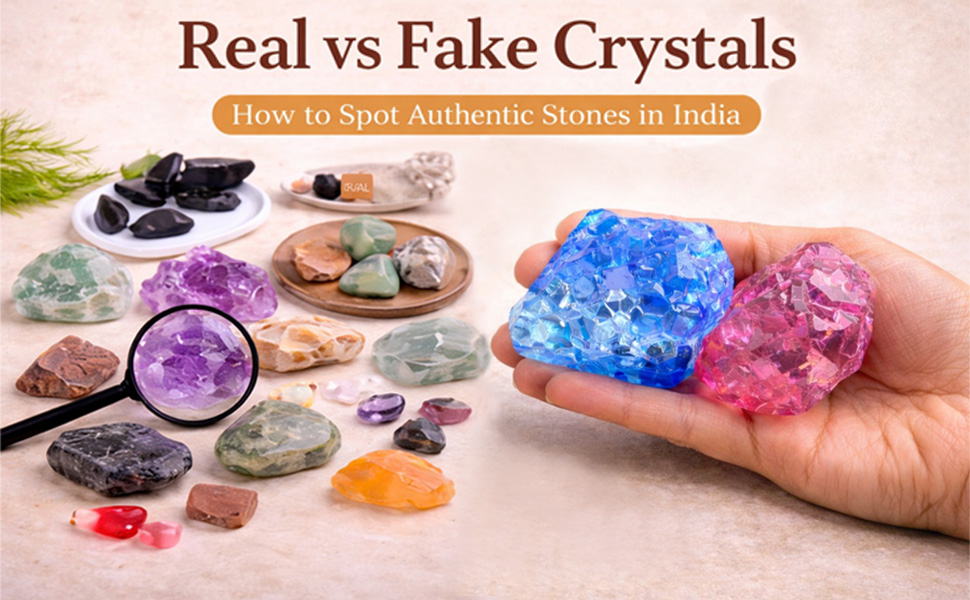
Table of Contents
A friend once showed off a shiny crystal bracelet bought online at a throwaway price. It looked perfect. Too perfect. A week later, the colour faded, and the stone felt oddly light, almost plastic. That moment raises a real question many buyers in India face today. Are the crystals being sold actually real? Crystals and crystal jewellery have moved from niche spiritual shops into mainstream gifting, fashion, and wellness spaces. Demand has exploded. With that growth comes imitation, shortcuts, and sellers who bank on the fact that most people do not know the difference. This guide breaks down practical, reliable ways to spot authentic crystals in India without needing expert tools or years of experience.
Why Fake Crystals Are So Common in India
India has a strong market for spiritual products, Vastu items, and gemstone jewellery. Crystals fit naturally into this ecosystem. The problem starts when demand grows faster than education. Many fake crystals are made from:
- Glass dyed to resemble natural stones
- Synthetic lab-created stones are sold as natural
- Low-grade stones treated with heat or chemicals
These products are not always labelled honestly. Marketplaces often focus on price competition, not authenticity. Low-price buyers end up rewarding hawks who cut corners.
Real vs Fake Crystals: Key Differences That Matter
Weight and Temperature
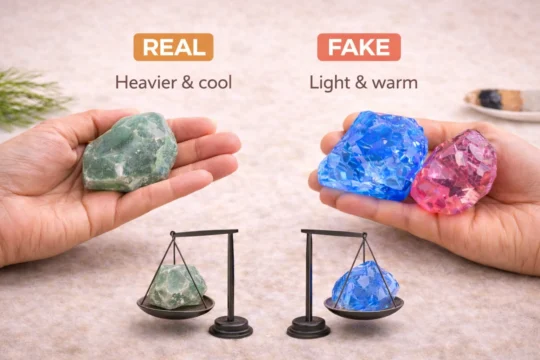
Authentic crystals usually feel heavier than they look. Natural stones have density. Fake stones made of glass or resin often feel light.
The other rapid test is temperature. Real crystals tend to feel cool when touched and take time to warm up. Fake ones warm quickly in the hand.
This test is not perfect, but it filters out many obvious fakes.
Visual Imperfections Are a Good Sign
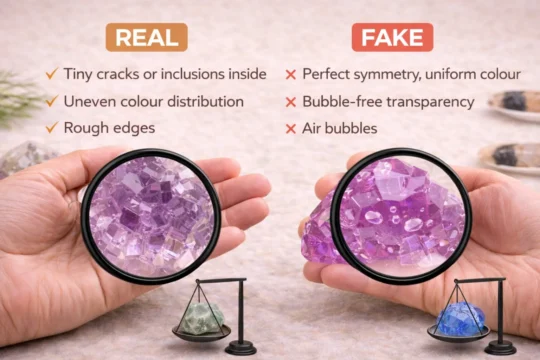
Nature does not produce flawless copies. Real crystals often show:
- Tiny cracks or inclusions inside
- Uneven colour distribution
- Slightly rough edges or irregular shapes
Perfect symmetry, uniform colour, and bubble-free transparency often point to glass or synthetic materials. Air bubbles inside a stone are a major red flag.
Scratch Test Needs Caution
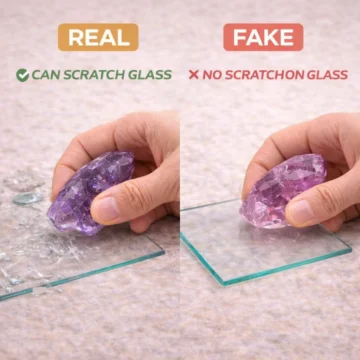
Many guides recommend scratching glass to test hardness. This works only if done carefully and on a hidden edge.
Quartz-based crystals like amethyst or citrine can scratch glass. Fake glass crystals cannot. Still, this test risks damaging genuine stones and should be used sparingly.
How Crystal Jewellery Reveals the Truth
Crystal jewellery is harder to judge because stones are polished, drilled, and mounted. Even then, indications exist. Look closely at:
- Drill holes that appear melted rather than cleanly cut
- Paint residue near bead holes
- Uneven bead sizes in supposedly premium jewellery
Authentic crystal jewellery usually costs more because cutting and polishing natural stone is labour-intensive. Unrealistically low prices often signal shortcuts.
Certification and Seller Transparency in India
Certification is tricky in the crystal world. Most of the crystals are not very much certified, unlike diamonds. What matters more is seller transparency. Trustworthy sellers usually:
- Share the crystal origin when possible
- Clearly state if a stone is natural or treated
- Educate buyers instead of making miracle claims
Broad statements of hype about promises are a red flag.
Common Myths That Mislead Buyers
Myth 1: Bright Colour Means Better Quality Many fake crystals are brighter because dyes enhance them. Stones of nature tend to be more soft and earthy.
Myth 2: Expensive Always Means Real High prices do not guarantee authenticity. The pricing must be based on stone type, size and workmanship.
Myth 3: All Online Crystals Are Fake Online buying is not the issue. Lack of research is. Reputable online sellers exist and often provide better education than local stalls.
Practical Buying Checklist
Before purchasing crystals or crystal jewellery, pause and check:
- Does the seller explain the stone in simple, realistic terms?
- Are imperfections visible in product photos?
- Is pricing reasonable for the stone type?
- Does the brand educate rather than exaggerate?
Trust builds slowly. Sellers focused only on urgency, and discounts usually cut quality, too.
Why Authenticity Matters Beyond Belief
Many people buy crystals for emotional comfort, gifting meaning, or spiritual support. Even without deep belief, authenticity still matters. Natural crystals carry history, geological formation, and craftsmanship. Fake stones reduce that experience to decoration. It is not bad about decorative stones; however, honesty counts. Buying authentic products supports ethical sourcing, skilled artisans, and transparent businesses.
Trust Your Instincts, Buy Authentic
Spotting real versus fake crystals in India does not require becoming a gemologist. Being aware, taking time and having the desire to doubt the deals that seem too good often bring better decisions. Crystals should feel grounding, not doubtful. Informed buying protects both money and meaning. To the people who want carefully selected crystals and crystal jewellery in clarity and care this philosophy is at the centre of Shubhanjali.